
Food prices probably fueled a sharp rise in India's retail inflation in December after the record low struck the previous month.

The RBI must cut rates to spur growth, say experts.

'The hour is very late, and the choice between triumph and tragedy knocks at our door,' says Ajay Shah.

'The actions of Indian monetary authorities will depend on how quickly they want the inflation to come down to 4 per cent.'

Indian economy is poised to do better on the back of reforms undertaken by the government and is expected to clock a 6.5-7 per cent growth in the remaining part of the decade, Chief Economic Advisor (CEA) V Anantha Nageswaran said on Tuesday. Addressing reporters here after the tabling of the Economic Survey in Parliament by Finance Minister Nirmala Sitharaman, Nageswaran said that by and large, inflation is likely to be "well behaved" in FY2023-24 barring headwinds. "My optimism is that in the coming decade, rest of the decade, the potential GDP growth, without taking into account export potential, because global economy is still rife with uncertainty, the growth rate would be around 6.5 to 7 per cent, rather than between 6 per cent and 6.5 per cent," he said.

Since March 31, 2022, the PSBs' market cap has risen 43.7 per cent, from Rs. 7.29 trillion to Rs. 10.47 trillion. It's time for the government, the majority owner of public sector banks, to reap the benefit of the rally in bank stocks, recommends Tamal Bandyopadhyay.

On the reduction in the SLR ratio, he said it was a signal from the point of view of long-term reforms.

Reserve Bank of India (RBI) Governor Shaktikanta Das on Thursday said the country's economy has recovered stronger than expected from the initial impact of the COVID-19 pandemic, but there is a need to be watchful of demand sustainability after the end of festivities. Speaking at the annual day event of Foreign Exchange Dealers' Association of India (FEDAI), Das said there are downside risks to growth across the world and also in India. It can be noted that the Indian economy contracted by 23.9 per cent in the first quarter of the fiscal year, and the RBI expects the economy to shrink by 9.5 per cent in FY21.

Morgan Stanley on Thursday became the latest brokerage to question the valuations of Indian equities and downgraded them from 'overweight' (OW) to 'equalweight' (EW) and recommended taking some money off the table. "We move tactically EW on India equities after strong relative gains - we expect a structural multi-year earnings recovery, but at 24 times forward price-to-earnings (P/E) we look for some consolidation ahead of US Fed tapering, an RBI hike in February and higher energy costs," Morgan Stanley equity strategists, led by Daniel Blake and Jonathan Garner, said in a note on Asia Pacific markets. The brokerage has upgraded Indonesia to OW, while maintaining an EW stance on China and UW on Taiwan.

The Indian economy recovered from the Covid-induced downturn during 2022 and is poised for further improvement in the coming quarters though downside risks emanating from geopolitical tensions, strengthening dollar and elevated inflation will continue. The positive trajectory in the growth trend and improved fundamentals will help the nation in neutralising the impact of global headwinds which are expected to have a bearing on the country's exports in the months to come. The challenges before the government and the Reserve Bank in the new year would be to arrest inflation, check declining value of rupee against US dollar and promote private investment and growth, with a view to ensure that the country remains one the fastest growing major economies of the world.

Demonetisation will wipe out the likely benefits of a good monsoon this year, says Christopher Wood of CLSA.
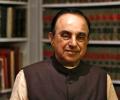
While he has plenty of critics at home, Rajan is a favourite among foreign investors and has been credited for bringing inflation under control.
Without bringing sound governance and technical capabilities into the RBI's work, injecting new money sets the stage for a next wave of bad behaviour by banks, warns Ajay Shah.

'We can go somewhere between 35 per cent and 40 per cent.'

Kumar said the Commission will follow the time-tested methods of consultations and consensus building in bringing about any reforms and will not shy away from tough decisions, according to an Election Commission (EC) statement.

The RBI governor believes corruption ca be fought by streamlining the system.

The government has invited applications for the post of chief economic adviser (CEA) to replace K V Subramanian, who will complete his three-year tenure next month. Subramanian was appointed as CEA on December 7, 2018, while he assumed charge on December 24 in the same year. As per the public notice dated October 24, 2021 issued by Department of Economic Affairs, the Ministry of Finance, officer of central, state governments, RBI and public sector banks holding analogous post on regular basis in parent cadres or department are eligible to apply for the post.

Headline inflation will come down under the 6 per cent mark in July itself but will stay at an elevated level of over 5 per cent for some time, Chief Economic Advisor K V Subramanian said on Thursday. Such an outcome will get the price rise back into the upper-end of the target band given to RBI, he said, adding that consumer price inflation had breached the mark for three consecutive quarters last fiscal because of supply side issues like challenges in movement of goods. "With reasonable probability, I expect this month the (inflation) print to come less than 6 per cent," Subramanian told a conference organised by industry lobby Ficci. Right after data for May showing inflation at 6.4 per cent had come out, Subramanian said he had predicted it will cool down in internal meetings and also during "deliberations with the regulator".

Amid a debate on the freebies, the Election Commission on Tuesday proposed amending the model code to ask political parties to provide authentic information to voters on the financial viability of their poll promises.

Acharya emphasised that the time is "really ripe" for land, labour and agricultural reforms in India.

RBI may hold rates steady as economic parametes are going strong, say experts.

India, he said, has already taken a host of reforms in banking and other sectors and is now focussing on stepping up public investment. "Compared to other nations, even among advanced countries, I think India is relatively better placed for the simple reason that India paid a certain price last decade... we had a banking system stress which was then compounded by stress in the non-banking financial sector towards 2018," he said at Amazon Smbhav Summit.
The study points out that for the determination of growth and investment at the macroeconomic level, the real interest rate is more relevant, even though the nominal interest rate is important for investment planning at the firm level.

The employment situation remains dire. Whatever can be done to promote greater low-skill employment should be pursued aggressively, advises former chief economic adviser Shankar Acharya.

Pointing out that these recent measures are incremental rather than radical, Moody's said, these steps will sustain higher gross domestic product growth and address some of the constraints on the country's sovereign credit profile.

India's macroeconomic situation is improving fast and the country's GDP growth will turn positive in the third and fourth quarters of the current financial year, eminent economist Ashima Goyal said on Sunday. Goyal in an interview to PTI said the management of the COVID-19 pandemic and gradual unlocks announced by the government have helped in avoiding multiple COVID-19 peaks. The growth estimates by different agencies are being continuously revised, she said.
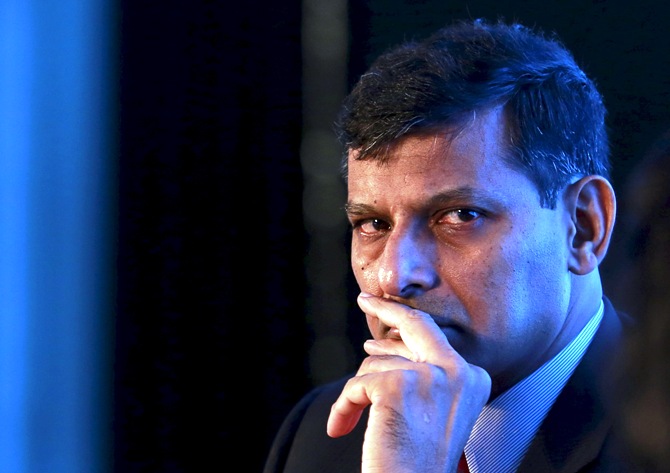
The NPA of the public sector banks rose to 6.03% as of June 2015.

Pranab Mukherjee's stewardship of the economy will stand out as much for the manner in which he managed controversies as for creating quite a few of them, says A K Bhattacharya.

RRBs were formed under an Act to provide credit to small farmers, agricultural labourers and businesses in rural areas.

Foreign portfolio investor (FPI) flows into India may remain tepid in 2022, said a recent note by Goldman Sachs, who now peg the foreign portfolio investment into India at $5 billion in 2022, down from their earlier forecast of $30 billion with risks skewed to the downside. "There has been $15 billion of equity outflows YTD in India already, and the IPO of the largest insurance company has been pushed out. "Additionally, with no mention of India's inclusion in global bond indices in the Union Budget, there are risks to our already conservative base case assumption of an announcement of India's likely inclusion into the GBI-EM Global Diversified Bond Index in Q4-2022," wrote Andrew Tilton, Goldman Sachs' chief Asia-Pacific economist in a co-authored report with Santanu Sengupta and Suraj Kumar.

The reform priorities are clear: enhance savings, improve productivity. Just 25 basis points of moving interest rate up or down would not boost investment: Former RBI Governor Y V Reddy.
Fitch Ratings on Thursday said the resurgence of COVID-19 infections may delay India's economic recovery, but won't derail it, as it kept the sovereign rating unchanged at 'BBB-' with a negative outlook. It projected a 12.8 per cent recovery in GDP in the fiscal year ending March 2022 (FY22), moderating to 5.8 per cent in FY23, from an estimated contraction of 7.5 per cent in 2020-21. Fitch had in June last year revised outlook for India to 'negative' from 'stable' on grounds that the coronavirus pandemic had significantly weakened the country's growth outlook and exposed the challenges associated with a high public debt burden.

Armed with necessary macro and micro growth drivers, India is on its way to becoming the fastest growing major economy in the world, a finance ministry report said. Rapid vaccination and teeming festivities will push India's ongoing recovery resulting in narrowing of demand-supply mismatches and greater employment opportunities, as per the monthly Economic Review prepared by the ministry.

'If you look at the order books of capital equipment companies or money deployed on the ground, there is forward movement in terms of actual investment by the private sector.'

The govt must fix regulatory hurdles to ensure growth.

FY22 will be the year to rebuild with the IMF projecting output growth at 11.5 per cent, economic survey at 11.0 per cent and the RBI's Monetary Policy Committee at 10.5 per cent.

The central bank has vehemently opposed the proposal, citing different reasons, including lack of focus and unconvincing results abroad.
According to him, the rural economy will play a critical role in the revival process.
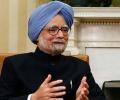
There is a need for tax reforms in the country in a bolder way, Singh said.

The days of anti-reform, anti-growth advisers that undermined our economy in the UPA-II years will now be strictly behind us: Bhagwati
 © 2026 Rediff.com - Advertise with us - Disclaimer - Privacy Policy - Sitemap - Feedback - About us - Terms of use - Grievances